
Get a competitive grey iron quote

 
ADI Grade 2
ADI Grade 3
ADI Grade 4
ADI Grade 5
 
Aluminum


Casting Photo Gallery

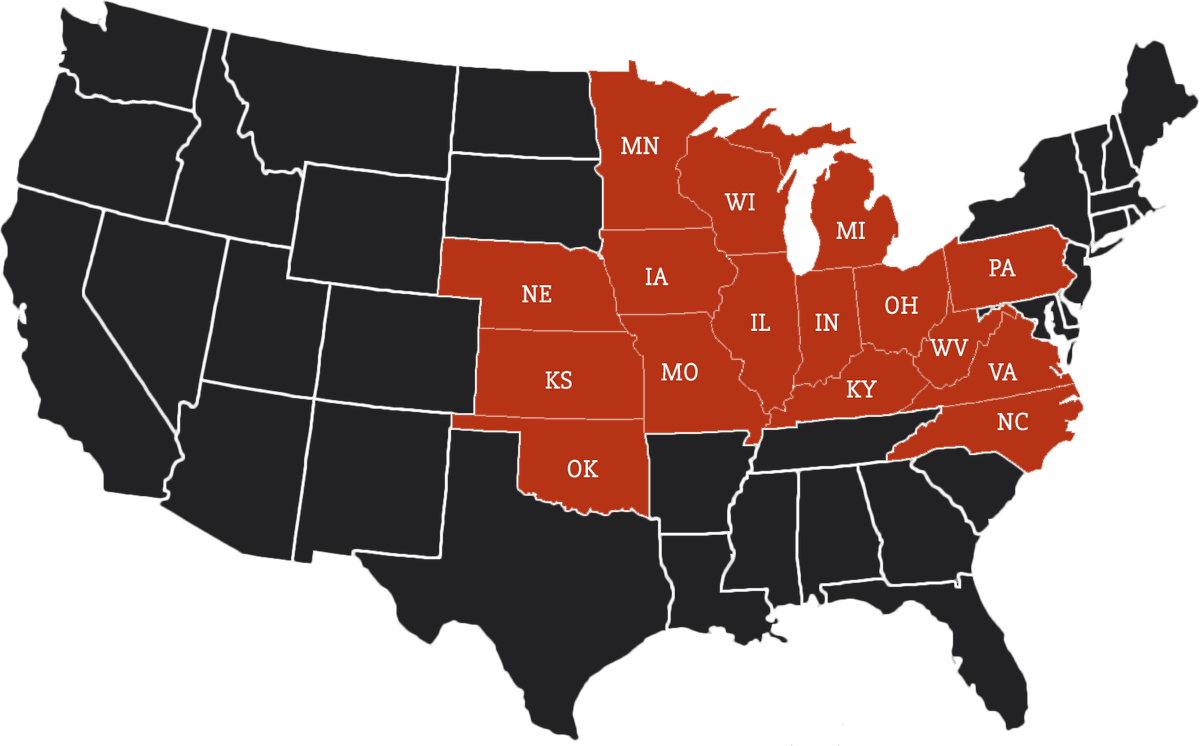
Get Competitive Quotes from Foundries Serving the Following States:

Get a Competitive Casting Quote

Foundry Source Capabilities


Download Our Foundry
Source Brochure


Ductile Iron Castings
Ductile Iron Foundries
Ductile Iron Foundry
Gray Iron Castings
Gray Iron Foundries
Gray Iron Foundry
Grey Iron Castings
Grey Iron Foundries
Grey Iron Foundry
Nodular Iron Castings
Iron Castings Properties


Glossary of Casting Terminology

Since 1956, Carson Castings has delivered prompt, reliable and knowledgeable service to customers of all sizes - from the family-owned business to Fortune 500 companies.

ABCDEFGHIJKLMNOPQRSTUVWXYZ


Learn more about our services:


1. ADI Castings

2. Steel Castings

3. Ductile Iron Castings

4. Aluminum Castings

5. Gray Iron Castings

6. Brass & Bronze Castings


A
BCDEFGHIJKLMN
OPQRSTUVWXYZ


A

Air Furnace -  A long, low, reverberatory-type furnace, in which metal is melted by flame from fuel burning at one end of the hearth, passing over the bath toward the stack at the other end of the hearth; heat is also reflected from the roof and side walls.

Alloy - A substance having metallic properties and composed of two or more chemical elements of which at least one is a metal.

Alloying Elements - Chemical elements constituting an alloy; usually limited to ele­ments added to modify the properties of the base metal.

Annealing - Generally a heat treatment to soften metals; for iron and steel, consists of healing above the critical temperature followed by slow cooling usually in the fur­nace. Specifically used to modify the properties of 65/45/12 ductile iron castings to 60/40/18 ductile iron casting properties.

Arc Furnace - A furnace in which metal is melted either directly by an electric arc between an electrode and the work or indi­rectly by an arc between two electrodes adjacent to the metal.

As-Cast Condition - Castings as removed from the mold, without subsequent heat treatment.

Atmosphere (Protective) -  In metallurgical practice, the gases surrounding the work in a furnace or other high-temperature ap­paratus. The character of the atmosphere varies with the work being carried out and, in nature, may be oxidizing, reducing or neutral.

Austempering -  A heat treatment process that consists of quenching a ferrous alloy from a temperature above the critical range into a medium having a rate of heat abstraction (usually molten salt) sufficiently high to prevent the formation of high temperature transformation products; and in maintaining the alloy, until transformation. Most widely used to produce austempered ductile iron castings. Also performed on gray iron castings, but to a lesser degree.

back to top

B

Burnt-on Sand - A misnomer. Usually due to metal penetration into the sand casting mold result­ing in a mixture of sand and metal adher­ing to the surface of a casting.

back to top

C

Captive Foundry - An organization that produces castings from its own patterns for its own use. Sometimes specific to a material poured such as a captive gray iron foundry.

Carbide - A compound of carbon with one or more metallic elements.

Carburizing - The diffusion of carbon into solid iron by heat treatment in a carbon rich atmosphere.

Case Hardening - A process of hardening a ferrous alloy so that the surface layer or case is made substantially harder than the interior or core. Induction hardening and flame hardening are most commonly used for ductile iron castings.

Cast Iron - A generic term for the family of high carbon-silicon-iron casting alloys. Also called gray iron, grey iron, gray cast iron and grey cast iron.

Castability - A complex combination of liq­uid-metal properties and solidification characteristics which promotes accurate and sound final castings.

Casting (noun) - Metal object cast to the required shape by pouring or injecting liq­uid metal into a mold, as distinct from one shaped by a mechanical process. Often preceded by the material used to produce the casting. For example: gray iron casting, ductile iron casting, steel casting, bronze casting or aluminum casting.

Casting (verb) - Act of pouring molten metal into a mold.

Casting Yield - The weight of casting or castings divided by the total weight of metal poured into the mold, expressed as a percent.

Centerline Shrinkage - Shrinkage or poros­ity occurring along the central plane or axis of a cast part.

Centrifugal Casting - A process of filling molds by 1) pouring metal into a sand or permanent mold that is revolving about either its horizontal or its vertical axis; or 2) pouring metal into a mold that is subsequently revolved before solidification of the metal is complete. See also Centrifuge Casting.

Chaplets - Metal supports or spacers used in molds to maintain cores, or parts of the mold which are not self supporting in their proper positions during the casting pro­cess. They become a permanent part of the casting.

Charge - 1) The materials placed in a melt­ing furnace. 2) Castings placed in a heat treating furnace.

Charpy Test - A pendulum type of impact test in which a specimen, supported at both ends as a simple beam, is broken by the impact of the swinging pendulum. The energy absorbed in breaking the speci­men, as determined by the decreased rise of the pendulum, is a measure of the im­pact strength of the metal. Often times related to steel castings or ductile iron castings.

Chill - 1) A white iron structure that is pro­duced in iron castings by rapid solidifica­tion. 2) A metal mold insert which induces rapid solidification of the metal. Also called Chiller, or Chill Block.

Chilled Iron - Cast iron that is poured into a metal mold or against a mold insert so as to cause rapid solidification. This often leads to a white iron structure in the casting.

Chills - Metal inserts in molds or cores at the surface of a casting or within the mold which serve to hasten solidification of heavy sections and cause the casting to cool at a uniform rate.

Chipping - Removal of fins and other ex­cess metal from castings by means of chis­els and other suitable tools.

CO2 Process  - Molds and cores made with sand containing sodium silicate are   instantly hardened by permeating the sand with carbon dioxide gas. Also called no-bake molding or air-set molding

Coining - A press metal-working operation which establishes accurate dimensions of flat surfaces or depressions under predomi­nantly compressive loading.

Coke -Coal from which the volatiles have been driven off by heating in the absence of air.

Cold Shot - Small globule of metal embed­ded in, but not entirely fused with the casting.

Cold Shut - A casting defect caused by im­perfect fusing of molten metal coming to­gether from opposite directions in a mold, or due to folding of the surface.

Commercial Foundry -An organization that produces castings for its customers from the customers' patterns. Sometimes refered to as a jobbing foundry. Examples include commercial ductile iron foundry, commercial steel foundry

Compacted Graphite Iron - Cast iron in which the graphite is in the form of inter­connected flakes with blunt edges. Its properties are intermediate between gray iron castings and ductile iron castings.

Compression Yield Strength - The maxi­mum stress that a material can withstand under compression without sustaining unit plastic deformation beyond a predeter­mined limit.

Continuous Casting - A process for forming a bar of constant cross-section directly from molten metal by gradually withdraw­ing the bar from a die as the metal flowing into the die solidities.

Cope - Upper or topmost section of a flask, mold, or pattern.

Cope and Drag Patterns - Pattern equip­ment in which the cope and drag pattern sections are mounted on separate pattern boards so that the cope and drag mold sec­tions can he made at the same time.

Core - A preformed sand aggregate in­serted into a mold to shape the interior of the casting or that part of a casting which cannot he shaped by the pattern.

Core blower - A machine for making cores by blowing sand into the core box by means of compressed air. The air escapes from the core box through finely grated openings called vents.

Core box - Wood, metal, or plastic struc­ture containing a shaped cavity into which sand is packed to make a core.

Core Dryers - Supports used to hold cores in shape while being baked; constructed from metal or sand for conventional bak­ing, or from plastic material for use with dielectric core baking equipment.

Core Oil - A binder for core sand that sets when baked and is destroyed by the heat from the cooling casting.

Core Print  - Projections attached to a pat­tern in order to form recesses in the mold at points where cores are to be supported.

Core Shift - A variation from specified di­mensions of a cored casting section, due to a change in position of the core or mis­alignment of cores in assembling.

Core Wash - A suspension of a fine refrac­tory applied to cores by brushing, dipping or spraying to improve the surface of the cored portion of the casting.

Coupon - An extra piece of metal, either cast separately or attached to a casting, used to determine the analysis or proper-lies of the metal.

Critical Temperature - Temperature at which metal changes phase. In usual iron alloys the temperature at which alpha iron transforms to gamma iron or vice versa. Actually, a temperature range for cast irons.

Crucible - A pot or receptacle made of re­fractory materials such as high tempera­ture resisting alloys, graphite, alundum, magnesia, or silicon carbide, bonded with clay or carbon, and used in melting or fu­sion of metals.

Crush - A casting defect. An indentation in the casting surface due to displacement of sand into the mold cavity when the mold was closed.

Cupola - A vertically cylindrical furnace for melting metal, in direct contact with coke as fuel, by forcing air under pressure through openings near its base.

back to top

D

Density - The mass per unit volume of a substance, usually expressed in grams per cubic centimeter or in pounds per cubic foot. Aluminum castings have a lower density than that of gray iron castings, ductile iron castings or steel castings.

Die Casting -A casting process in which the molten metal is forced under pressure into a metal mold cavity.

Draft (Pattern) - The taper on the sides of a pattern which are perpendicular to the parting plane that allows the pattern to be withdrawn from the mold without breaking the edges of the mold.

Draft (Permanent Mold) - The taper in the mold cavity which allows the casting to be removed easily.

Drag - Lower or bottom section of a mold, flask, or pattern.

Drawing (Pattern) -Removing pattern from mold or mold from pattern in produc­tion work.

Dross - Metal oxides in, or on the surface of, molten metal, or trapped in the casting.

Dry Sand Mold - A sand mold that is dried before filling with liquid metal.

Ductile Iron - Cast iron containing graphite in a spherulitic form. Also called nodular iron, spherulitic iron, or S.G. iron.

Ductility - The property permitting per­manent deformation without rupture in a material by stress in tension.

Dump box  - A simple core box from which the core is removed, after the box has been filled with sand, by inverting the core box onto a core plate.

Duplexing - Melting in one furnace and su­perheating and refining in another.

back to top

E

Elastic Limit -Maximum stress that a mate-rial will withstand without permanent de­formation.

Elongation - Amount of permanent exten­sion in the vicinity of the fractures in the tensile test; usually expressed as a percent­age of original gage length, such as 25 per cent in two inches. Certain grades of steel castings have elongations exceeding 25%. Ductile iron castings can meet or exceed 18% in grade 60/40/18

Expendable Pattern - A pattern that is de­stroyed in making a casting. It is usually made of wax or foamed plastic (Styrofoam).

back to top

F

Facing Material - Coating material applied to the surface of a mold to protect it from the heat of the molten metal. See Mold Wash.

Facing Sand - Specially prepared molding sand mixture used in the mold adjacent to the pattern to produce a smooth casting surface.

Faked - The purposeful distortion of a pat­tern to compensate for casting warpage so as to obtain a casting of the desired shape.

Fatigue Fracture - The gradual propaga­tion of a crack across a section due to cyclic stresses within the elastic limit.

Fatigue Limit - Maximum stress that a metal will withstand without failure for a specified large number of cycles of stress. Usually synonymous with endurance limit.

Fatigue ratio - The ratio of fatigue limit or fatigue strength at N cycles to the static tensile strength.

Fatigue Strength - The maximum stress which a material can sustain, for a given number of stress cycles, without fracture.

Feeder, Feed Head (Riser) - A reservoir of molten metal attached to a casting to com­pensate for the contraction of metal as it solidifies, thus preventing voids in the cast­ing. Also known as a riser.

Ferrite -  An essentially carbon-free solid so­lution in which alpha iron is the solvent, and which is characterized by a body-cen­tered cubic crystal structure.

Ferro-Alloy - An alloy of certain elements with iron used to add these elements to molten metal.

Ferrous - Metallic materials in which the principal component is iron. Also a general term to describe steel castings, gray iron castings and ductile iron castings.

File Hardness - The hardness of metal gen­erally at an edge as determined by whether a file of an established hardness will bite into the metal.

Fillet - Material used on a pattern or core box to round out the internal corners formed by the intersection of two surfaces. Maybe of wax, plastic, leather, or wood.

Fin - Thin projection of excess metal on a casting resulting from imperfect mold or core joints.

Finish Allowance - Amount of stock left on the surface of a casting for machining.

Flake Graphite - Graphitic carbon, in the form of platelets, occurring in the micro-structure of gray cast iron.

Flame Hardening - Process of hardening a casting surface by healing it above the transformation range with a high temperature flame followed by rapid cooling.

Flask - Metal or wood frame, without a top and without a fixed bottom, used to hold the sand of which a mold is formed; usually consists of two parts, the cope and drag.

Flask Pins - Projections for aligning the parts of a flask.

Founding - The art of melting and casting metals into useful objects.

Foundry - A building or establishment where founding is carried on. Examples: aluminum foundry, steel foundry, gray iron foundry, ductile iron foundry

Free Fertile - Ferrile formed into separate grains and not intimately associated with carbides as in pearlile.

back to top

G

Galvanizing - The coaling of iron or steel with zinc.

Gas Holes - Rounded cavities, either of spherical or elongated round shape, caused by the generation and/or accumulation of gas or entrapped air during solidification of the metal.

Gate - End of the runner in a mold where molten metal enters the casting or mold cavity; sometimes applied to entire assem­bly of connected channels and to the pat­tern parts which form them.

Gated Patterns - One or more patterns with gales or channels attached.

Gating System - The complete assembly of sprues, runners, and gates in a mold through which metal flows to enter the casting cavity. Term also applied to equiva­lent portions of the pattern.

Graphite - One of the crystal forms of car­bon; also the uncombined carbon in cast irons (gray iron castings).

Gray Cast Iron - iron which contains a rela­tively large percentage of the carbon pres­ent in the form of flake graphite. The metal has a gray fracture. Also known as grey cast iron

Green Sand - A molding sand that has been tempered with water and is employed for casting when still in the damp condition. Not specific to one material as the technique is used to produce aluminum castings, gray iron castings, steel castings, bronze castings, brass castings and ductile iron castings.

Green Sand Mold -  A mold composed of moist molding sand and not dried before being filled with molten metal.

Growth, Cast Iron - Permanent increase in dimensions of cast iron resulting from re­pealed or prolonged healing at tempera­tures over 900 degrees F. This growth is due to 1) graphitization of carbides, and 2) inter­nal oxidation.

back to top

H

Hardenability - In a ferrous alloy, the prop­erty that determines the depth and distri­bution of hardness induced by quenching.

Hardness - The property of a substance de­termined by its ability to resist abrasion or indentation by another substance. For metals, hardness is usually defined in terms of the size of an impression made by a stan­dard indenter. (Brinell, Rockwell, Vickers, etc.)

Heat - The entire period of operation of a continuous melting furnace such as a cu­pola from light-up to finish of molding. One cycle of operation in a batch melting fur­nace. Also the total metal from one such operation.

Heat Treatment - A combination of heat­ing, holding, and cooling operations ap­plied to a metal or alloy in the solid state in a manner which will produce desired properties.

Hot Tear - Surface discontinuity or frac­ture caused by either external loads or in­ternal stresses or a combination of both acting on a casting during solidification and subsequent contraction at temperatures near the melting point.

back to top

I

Impact Resistance - The resistance of a ma­terial to breaking by loading or stressing at high rates.

Impact Strength - The energy absorbed in fracturing a standard specimen (notched or unnotched) by a blow from a pendulum in one of several standard impact tests.

Impregnation - The treatment of defective castings with a sealing medium to stop pressure leaks in porous areas. Mediums used include silicate of soda, drying oils with or without styrenes, plastics, and pro­prietary compounds.

Inclusions - Non metallic particles, such as oxides, sulphides or silicates that are held within solid metal.

Induction Furnace - An alternating cur­rent electric furnace in which the primary conductor is coiled and generates a second­ary current by electromagnetic induction which heats the metal charge.

Induction Hardening - Process of harden­ing the surface of a casting by heating it above the transformation range by electri­cal induction, followed by rapid cooling.

Inoculant  - Materials which, when added to molten metal, modify the structure, and thereby change the physical and mechani­cal properties to a degree not explained on the basis of the change in composition resulting from their use. Most widely used in a ductile iron foundry.

Insert - A part, usually formed from metal, which is placed in a mold and becomes an integral part of a casting.

Insert Pattern - A pattern plate without provision for flask registration which is made to be inserted and locked into a frame that fits on a molding machine and provides for flask registration.

Internal Shrinkage - A void or network of voids within a casting caused by inadequate feeding of that section during solidi­fication.

back to top

J

Jacket Mold - A wooden or metal form, which is slipped over a mold made in a snap or slip flask, to support the four sides of the mold during pouring.

Jobbing Foundry - A casting facility equip­ped to economically produce a single cast­ing or in small quantities from a pattern. The term is sometimes used to designate a commercial foundry. Also used to describe a casting facility that pours to distinctly separate materials such as steel castings and ductile iron castings.

back to top

K

Keel block - A standard specimen for test­ing relatively high shrinkage ferrous alloys. A rectangular block with a smaller rectan­gular bar attached across the bottom and resembling the keel of a boat.

Knock-out - Operation of removing sand cores from castings. See also Shake-out.
Ladle - Metal receptacle frequently lined with refractories used for transporting and-pouring molten metal.

back to top

L

Loose Piece - 1) Core box; part of a core box which remains embedded in the core, and is removed after lifting off the core box. 2) Pattern; laterally-projecting part of a pattern so attached that it remains in the mold until the body of the pattern is drawn. Back-draft is avoided by this means. 3) Part of a permanent mold which re­mains on the casting, and is removed after casting is ejected from the mold.

Lost Wax Process - A casting process in which an expendable pattern made of wax or a similar material is melted or burned out of the mold rather than being drawn out.

back to top

M

Magnetic Particle Inspection - The use of magnetic particles as a dry powder or in a liquid suspension to indicate discontinui­ties in a surface when it has been magne­tized so that the particles adhere to the surface at the discontinuity.

Malleable Iron - Cast iron containing graphite in the form of nodules or temper carbon. It is cast as white iron and the graphite is precipitated during the subse­quent heat treatment. Malleable iron castings we widely replaced in the 1960’s with ductile iron castings.

Martensite - In iron or steel a very hard micro-constituent with an acicular (needle-like) appearance; produced in heat treat­ing by quenching or with alloys.

Master Pattern - A pattern embodying a double contraction allowance in its con­struction, used for making castings to be employed as patterns in production work.

Match Plate - A plate of metal or other ma­terials on which patterns and gating sys­tems split along the parting line are mounted back-to-back, or cast to form an integral piece. Common commercial names of match plate molding machines include Hunter (Hunter 10, Hunter 20 and Hunter 30), Roberts Sinto (Sinto 10, Sinto 20) and to a lesser degree Beardsley and Piper (B&P).

Matrix - The principal phase in microstructure in which another constituent, such as graphite, is embedded or enclosed.

Matrix Structure - In the microstructure of an alloy, the principal, continuous constitu­ent in which other constituents or phases reside.

Mechanical Properties - Those properties of a material that reveal the elastic and inelastic reaction when force is applied, or that involve the relationship between stress and strain; for example, the modulus of elasticity, tensile strength, and fatigue limit. These properties have often been designated as physical properties but the term mechanical properties is preferred. Often times cited in the material description of the material. Examples: Glass 30 gray iron, 65/45/12 Ductile Iron, etc….

Metallurgy - Science and art of extracting metals from their ores, refining them and preparing them for final use.

Microporosity - Extremely fine porosity caused in castings by solidification shrink­age or gas evolution.

Microstmcture - The structure of polished and etched metal and alloy specimens as revealed by the microscope at magnifica­tions over ten diameters.

Modulus of Elasticity - The ratio of tensile stress to the corresponding strain within the limit of elasticity of a material.

Mold - The form, made of sand, metal or refractory material, which contains the cavity into which molten metal is poured to produce a casting of desired shape.

Mold Shift - A casting defect which results when the parts of the mold do not match at the parting line.

Mold Wash - A slurry of refractory mate­rial, such as graphite and silica flour, used in coating the surface of the mold cavity to provide an improved casting surface.

Mold Weight - A weight that is applied to the top of a mold to keep the mold from separating.

Molding Machine - A machine for making molds. Trade names include Hunter, Roberts Sinto, Beardsley and Piper (B&P), Osbourne, Disa-matic, etc…

back to top

N

Ni-hard - The common trade name for nickel, chromium, alloyed white irons that have a martensitic matrix as cast.

Ni-resist - The common trade name for high nickel content alloy gray irons and ductile irons.

Nodular Graphite - Graphite in the nodu­lar form as opposed to flake form. Nodular graphite is characteristic of malleable iron. The graphite of nodular iron castings or ductile iron castings is spherulitic in form, but called nodular.

Nodular Iron - See ductile iron.

Normalizing - A heat treatment in which ferrous alloys are heated to a suitable tem­perature above the transformation range and cooled in still air to room temperature.

back to top

O

Oil Quenching - A ferrous material that has sufficient hardenabilily to be satisfactorily hardened by quenching in oil.

back to top

P

Parting Iine - A line on a pattern or casting corresponding to the separation between the parts of a mold.

Pattern - A form of wood, metal or other materials, around which molding material is placed to make a mold for casting metals.

Pattern Equipment - The entire collection of patterns, core boxes, jigs, fixtures, and gauges that are necessary to produce a casting in the desired quantities.

Patternmaker's Shrinkage - Contraction al­lowance made on patterns to compensate for the decrease in dimensions as the solidi­fied casting cools in the mold from freezing temperature of the metal to room tem­perature. Pattern is made larger by the amount of contraction that is characteristic of the particular metal to be used.

Pearlite - Lamellar aggregate (alternate plates) of ferrite and cementite in the mi-crostructure of iron castings and steel castings.

Pearlitic Malleable - An iron silicon carbon alloy, cast white and heat treated under controlled conditions in such a manner that part of the carbon is present as nodules of graphite and the remainder is intention­ally retained in the combined form. The combined carbon appears as spheroids, pearlite lamellae, or tempered martensite products.

Permanent Mold - A mold of two or more parts that is used repeatedly for the pro­duction of many castings of the same form. Liquid metal is poured in by gravity.

Physical Properties - Properties, other than mechanical properties, that pertain to the physics of a material.

Pig Iron - The crude product of the blast furnace where ore is reduced into iron and from which it is cast into small bars (pigs). A primary material used in producing ductile iron castings and Austempered ductile iron castings.

Production Foundry - A casting facility equipped to economically produce cast­ings in larger quantities. Examples: Production automotive foundry, production gray iron foundry, production ductile iron foundry.

PSI   - Pounds per square inch.

back to top

Q

Quench Hardening - Process of hardening a ferrous alloy of suitable composition by heating within or above the transformation range and cooling at a rate sufficient to increase the hardness substantially. The process usually involves the formation of martensite.

Quenching - A process of inducing rapid cooling from an elevated temperature.

back to top

R

Ramming - The compacting of molding sand in forming a mold.

Residual Stress - A stress that is a member of a balancing stress couple existing within a free body, not requiring a load external to the body lo generate the stress.

Rig - To prepare a pattern and flask equip­ment for molding.

Riser - A reservoir of molten metal pro­vided lo compensate for the contraction of the metal in a casting as it solidifies.

Rockwell Hardness - The relative hardness value of a metal determined by measuring the depth of penetration of a steel ball (1/16 in. dia. for B Scale) or a diamond point (C Scale) with controlled loading, the Rock­well number being the difference between the depth obtained with a minor and a ma­jor loading.

Runner - The portion of the gate assembly that connects the downgate (sprue) with the casting ingate or riser. The term also applies to that part of the pattern which forms the runner.

Runout - Unintentional escape of molten metal from a mold.

back to top

S

Sand Slinger - Mechanical device which impels sand by centrifugal force into a flask or core-box.

Scrap - a) Defective casting, b) Metal to be remelted.

S. G. Iron - See Ductile Iron.

Shake-Out - The operation of removing castings from the mold. A mechanical unit for separating the molding materials from the solidified metal casting.

Shear Strength - Maximum shear stress that a material is capable of withstanding without failure.

Shell Core - Process Resin-coated sand is blown into a heated core box. The sand against the box hardens. The balance of the sand is drained out to make a hollow core.

Shell Molding Process - A resin-coated sand is laid on a heated pattern so that the sand against the pattern bonds to­gether to form a hardened shell. Two mat­ing shells make a mold.

Shift - A casting defect caused by mismatch of mold halves or of cores and the mold.

Shrinkage - Decrease in volume of the metal as it solidifies.

Shotblasting - Casting cleaning process em­ploying a metal abrasive (grit or shot) pro­pelled by centrifugal or air force.

Slag - A product resulting from the action of a flux on the oxidized non-metallic con­stituents of molten metals. May also be pro­duced by oxidation of the molten bath, ash from the fuel, erosion of the refractories, and floating of non-metallics in the charge.

Snag - To remove excess metal from a cast­ing by rough grinding.

Snagging - The process of rough cleaning castings by grinding.

Spheroidization (Spheroidizing Heat Treatment) -  A long annealing at a temperature below but near the critical point, causing the cementite to spheroidize.

Spheroidized Cementite - A microstructure in which iron carbide occurs as small spheres in a ferritic matrix.

Spheroidized Pearlite -  A matrix microstructure that results from tempering pearlite at a sub critical temperature.

Spherulitic Graphite - Graphite occurring in highly compact spherical or nearly spherical form with a radial internal struc­ture. Characteristic of ductile iron castings.

Sprue - The vertical channel from the top of the mold to the parting line. Also a ge­neric term to cover all gates, risers, etc., returned to the melting unit for re-melt­ing. Also applied to similar portions of pat­terns.

Stack Molding - A molding method by which a number of identical mold sections are placed one above the other and poured through a common sprue.

Steel - An alloy of iron and carbon which may contain other elements in which the carbon content does not exceed about 2.0% and which is malleable to some tem­perature in the solid stale.

Sticker  - A lump on the surface of a casting caused by a portion of the mold face slick­ing to the pattern. Also, a forming tool used in molding.

Stress Relieving - A subcritical heat treat­ment to reduce residual stresses.

Strike-off or Slrickel - A tool with a straight or curved edge for removing excess sand from a mold or core.

Strip - To draw a pattern from a mold or a core from a core box.

Subcritical Anneal -  Heat treating at a tem­perature below that at which austenite is formed and above the temperature nor­mally used for stress relieving of the mate­rial that is being treated. Mostly related to ductile iron castings.

Surface Finish - Generally refers to the roughness of a machined surface, numeri­cally stated as the root-mean-square height of irregularities in microinches.

Swell - A casting defect consisting of an increase in metal section caused ny dis­placement of the mold wall under ferrostatic pressure.

back to top

T

Tapping - 1) The process of removing mol­ten metal from the melting furnace. 2) Opening the tap hole.

Target - To establish locating points on a casting for machining so that machining allowances are properly distributed.

Tempering - A heat treatment consisting of reheating quench-hardened or normal­ized iron to a temperature below the trans­formation range, and holding for sufficient time to produce the desired properties.

Tensile Strength - The maximum load in tension which a material will withstand prior to fracture. It is calculated from the maximum load applied during the tensile test divided by the original cross-sectional area of the sample. Sometimes referred to in the name of the material. Exmaples: Class 30 gray iron (The 30 represents the tensile strength of 30,000 psi.) 80/55/06 ductile iron (The 80 represents the tensile strength of 80,000 psi)

Test Lug - A small projection on a casting that may be fractured to test the ductility of the metal in the piece without destroy­ing the casting

Tie Bar - A bar shaped connection added to a casting to prevent distortion caused by uneven contraction between two sepa­rated members of the casting.

Torsion Strength - The shearing stress limit for a body when loaded by twisting.

back to top

U

Ultimate Strength - See Tensile Strength.

back to top

V

"V" Process - A molding process in which the sand is held in place in the mold by vacuum. The mold halves are covered with a thin sheet of plastic to retain the vacuum. Most common to an aluminum foundry.

Veining - A defect on the surface of a cast­ing appearing as veins or wrinkles and asso­ciated with excessive thermal movement of the sand, especially core sands.

Vent  - A small opening or passage in a mold or core to facilitate escape of gases when the mold is poured.

Vermicular Graphite - See compacted graphite.

Vickers Hardness - An indentation hard­ness test employing a 136° diamond Pyra­mid indentor and variable loads enabling the use of one hardness scale for all ranges of hardness.

back to top

W

Warpage - Deformation other than con­traction that develops in a casting between solidification and room temperature; also, distortion occurring during annealing, stress-relieving, and high-temperature ser­vice.

White Iron - Irons possessing white frac­tures because all or substantially all of the carbon is in the combined form.

Whiteheart Malleable - A European type of malleable iron not produced in North Amer­ica.

back to top

Y

Yield Strength - The stress at which a mate­rial exhibits a specified limit of permanent strain; often the maximum unit load with a 0.2% deviation from a proportional stress-strain relation. 100/70/03 ductile iron castings have a yield strength of 70,000 psi (the second place of the material description “70”) while 65/45/12 ductile iron castings have a yield strength of 45,000 psi.

back to top